

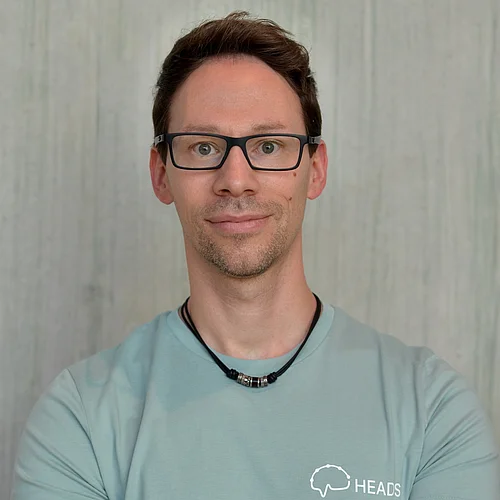
About Me
Sebastian started his academic career in Halle, Germany, studying how brain activity changes during cycling at different cadences—essentially convincing athletes to suffer on bikes while he watched their brains and called it a PhD. That phase was heavily performance-focused, with plenty of sweat and just enough science to make it respectable. Afterwards, he moved to Basel to make things more “health-oriented,” shifting his focus to how exercise influences cognitive development, with a particular interest in the neurocognitive processes behind it. He originally planned to stay briefly, but the university had other ideas—and eventually made it official with a professorship.
Now his work spans schools and clinical settings, while his daily routine includes teaching, writing grants that may or may not get funded, and attending meetings that seem to multiply on their own. He also supervises PhD students, guiding them through the same confusing but rewarding system he is still trying to understand himself.
Outside academia, he avoids reading altogether and instead enjoys reality TV—arguably another field where human behavior is studied under questionable experimental conditions, just with better ratings. To stay grounded, he relies on strength training, where progress is at least measurable and the only resistance comes from the weights, not reviewer comments.